
Read Full Magazine Here. When property owners experience damage or loss, uncertainties, trust issues, and miscommunication can often arise between insurers and policyholders.
In such situations, loss adjusting firms play a vital role in the insurance industry by independently assessing claims, evaluating damages, and determining the extent of the insurer’s liability. Through technical expertise, impartial investigations, and efficient claim management, loss adjusters help ensure fair settlements, reduce uncertainties, and maintain trust between insurers and policyholders.
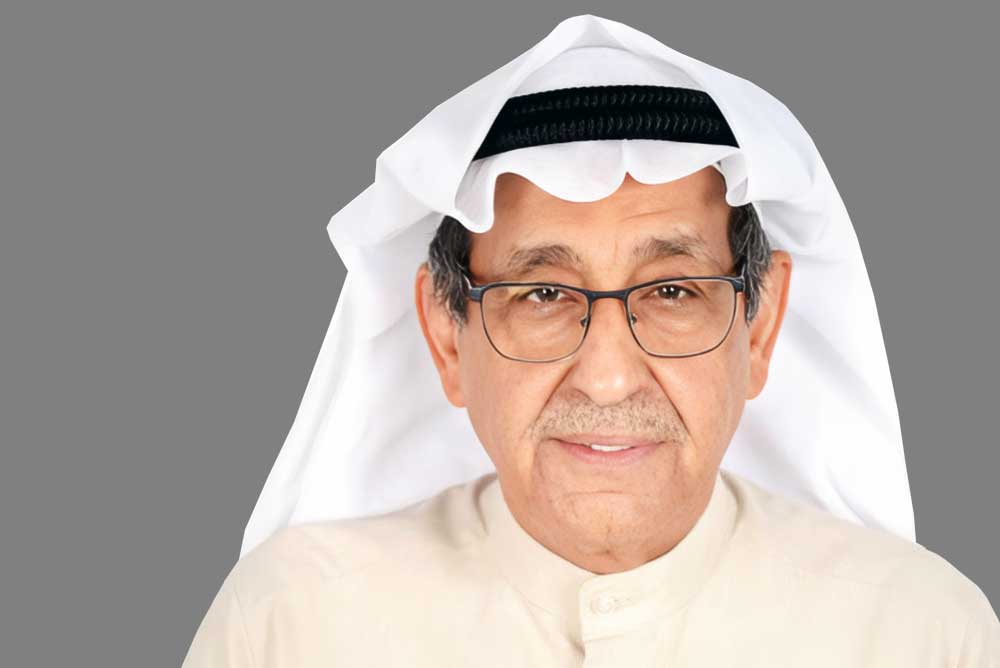
Alnassaar Loss Adjustors and Risk Assessment, a Kuwaiti-owned firm, has been carrying out this essential work since 1997. In this BUSINESS LIFE cover interview, Founder and Managing Director Salman Alnassaar shares his remarkable journey, the evolution of the company, and the vital role loss adjusters play in simplifying claims and maintaining trust between insurers and policyholders.
Overview of Alnassaar Loss Adjustors
• Established in 1997 as Salman Alnassaar Loss Adjusters & Risk Assessment, the firm was founded by Nassar, the first GCC citizen ever licensed as an independent loss adjuster.
• In May 2022, the company was reborn as Alnassaar Loss Adjusters & Risk Assessment Co., expanding its partnerships with leading insurers such as Gulf Insurance Group, Boubyan Takaful Insurance Company, Kuwait Insurance Company and KFH Takaful.
• From 2006 to 2022, the firm operated in partnership with M/s. Arab Loss Adjusters, Kuwait.
• Today, Alnassaar Loss Adjusters leverages cutting-edge technology, including its Virtual Claims Adjuster (VCA) software system, to deliver efficient, professional results across Kuwait’s insurance sector.
• The company specializes in mechanical and civil engineering claims, contractors’ plant and machinery, civil project claims, fire, theft claims, Fidelity, consequential losses, and comprehensive risk assessment assignments.
BL: Your profession is known to be demanding, requiring accuracy, patience, and resilience. How did the idea come to you to establish a loss-adjusting company in Kuwait, especially given that no GCC national had done so before?
Salman Alnassaar: The idea first came to me during my early career in reinsurance. I began working with the Arab Insurance Group in Bahrain, a company founded by Kuwait, the Emirates, and Libya. It was established offshore to insure oil tankers that were being struck by Iranian missiles at the time. Lloyds of London had imposed restrictions on insuring such vessels, and since oil was Kuwait’s primary source of income, the government sought to create a specialized reinsurance company.
They recruited some of the most experienced European and American underwriters—Trevor Church for aviation, Gunnar Maltegaard from Scandia Sweden, John Evers in oil, among others. I trained under these professionals, and although there was initially no claims department, I gravitated toward that area. Eventually, a lawyer and claims manager from Scandia joined, and together we formed a claims department. I was placed in charge of engineering claims under the Contractors’ All Risks (CAR) section.
For three years, I immersed myself in claims after two years in underwriting. I studied reports from international firms such as McLaren, Charles Taylor, Crawford and Cunningham. All were foreign; I never encountered an Arabic-authored report. By reading and analyzing these documents, I learned how to structure professional reports. Each case was unique, each incident different in nature, and this diversity became my training ground.
I resolved that when I returned to Kuwait, I would establish a loss-adjusting firm. Yet, upon my return, local insurance companies considered me “overqualified” and were reluctant to hire me. Instead, I worked as Assistant General Manager in a consumer finance company, overseeing legal and collections. This role gave me valuable exposure to finance and Kuwaiti law—skills closely aligned with loss adjusting.
Then came the Iraqi invasion of Kuwait. After liberation, Kuwait Airways needed an insurance director, as the incumbent was unable to return due to nationality restrictions. I was appointed, becoming the first GCC national to head an airline insurance department. At that time, Gulf Air, Emirates, and Saudi Arabian Airlines all had foreign insurance directors.
From 1992, I led Kuwait Airways’ insurance operations for five years, achieving significant progress. We have been improved from the position 14th to 8th globally in Hull insurance rates, and from 8th to 2nd in liability, just behind Singapore Airlines. During this period, GCC airlines operated under one umbrella, insuring collectively.
I had always promised myself that after five years, I would resign to pursue my dream. In 1997, I left Kuwait Airways and founded my own loss-adjusting office without any association with International Loss Adjusters Firm. It was not easy—starting a firm in this field is extremely challenging—but it was the realization of a vision I had nurtured for years.
BL: Starting a loss-adjusting office sounds extremely difficult. What were the main challenges you faced in establishing your firm?
Salman Alnassaar: It was indeed very hard. Loss adjusting is not a business you can simply open and expect immediate success. It requires credibility, trust, and recognition from insurance companies. At the beginning, I had to prove myself through the quality of my reports, the accuracy of my assessments and the skill of negotiations. Insurance companies were cautious, but gradually they began to see the value of having a local, GCC-based adjuster who understood both the technical and cultural context.
BL: You mentioned earlier that you were the first GCC national to head an airline insurance department. How did that experience shape your approach when you later founded your own firm?
Salman Alnassaar: My time at Kuwait Airways was crucial. It gave me exposure to international standards and the complexities of aviation insurance. We achieved remarkable progress in liability and Hull insurance rates, competing with global leaders. That experience taught me discipline, negotiation skills, and the importance of transparency. When I founded my own firm, I carried those lessons with me. I wanted my reports to be unbiased, professional, and respected internationally.
BL: Loss adjusting requires both technical expertise and patience. How do you balance these qualities in your work?
Salman Alnassaar: Patience is essential because every claim is unique. You cannot rush the process. At the same time, technical expertise ensures accuracy. I balance both by approaching each case methodically—studying the incident, gathering evidence, and preparing a report that reflects the true nature of the loss. My reports are not influenced by external pressures; they are based on facts. That is why insurance companies trust them.
BL: Your firm has introduced advanced tools such as the Virtual Claims Adjuster (VCA). How has technology changed the way you operate?
Salman Alnassaar: Technology has transformed the industry. With VCA, we can manage claims more efficiently, track progress in real time, and deliver faster results to clients. It reduces paperwork, minimizes delays, and ensures transparency. For us, adopting such systems was not optional—it was necessary to remain competitive and to serve clients with the professionalism they deserve.
BL: Looking back, what do you consider your proudest achievement in this journey?
Salman Alnassaar: Becoming the first GCC citizen to establish an independent licensed loss-adjusting firm is something I am proud of. But beyond that, my greatest achievement is building trust. Today, when insurance companies and clients see my name on a report, they know it is unbiased, accurate, and professional. That credibility is worth more than any single milestone.
BL: When you first established your firm, how did insurance companies begin to trust and appoint you for claims?
Salman Alnassaar: Insurance companies usually start by testing you with small claims. Once you prove yourself, they gradually assign larger and more complex cases. But finalizing non-marine claims takes time. For example, fire claims require fire brigade reports, theft claims need police reports, and these are government processes that can delay settlements.
For the first two to three years, you must survive without significant income—paying rent, salaries, and expenses while waiting for claims to be finalized. In my case, I was fortunate. I resigned on September 30, 1997, and just weeks later, on November 11, Kuwait experienced its worst-ever rainwater incident. At that time, there were only three active loss adjusters in the country—Cunningham Lindsay and two independents. Insurance companies urgently needed assessments, and I was appointed immediately.
That event generated around 30 claims at once, which gave my firm the breakthrough it needed. My reports were accepted by insurers and reinsurers alike, and from there, the business began to grow.
BL: What qualities do you believe are most important for a loss adjuster?
Salman Alnassaar: Two qualities: hard work and honesty. Claims can come at any time. So, you need a dedicated team ready to respond. But honesty is equally vital. Our role requires balancing the interests of both the client and the insurance company. You cannot favor one side over the other. If you are too harsh with the client, they may not renew their policy. If you are too lenient, the insurer loses trust.
For 28 years, I have never had a client refuse my appointment. Only once did a case go to court, and after three years, the court confirmed the exact amount I had assessed. No insurer has ever rejected me for dishonesty or unprofessionalism. My background as an engineer, my experience in insurance, finance, and aviation, and even my engineering consultancy work with Kuwait’s Ministry of Interior gave me the technical foundation to handle complex claims, especially in construction.
BL: Construction claims are known to be particularly complex. How do you approach them?
Salman Alnassaar: Construction claims differ significantly from fire or property claims. In most cases, insurers ask for three quotations and approve the lowest valid one. But in Contractors’ All Risks (CAR) policies, the contractor himself performs the repair and sets the price. That requires careful scrutiny.
You must determine whether the claimed price reflects the real cost or is inflated. Contractors often refer to the Bill of Quantity (BOQ), which includes overheads and profit margins. But repairs should exclude profit margins. As an engineer, I can evaluate market prices and ensure claims reflect actual repair costs, not contractual BOQ figures. This technical knowledge is essential to lead to fair assessments.
Over time, my reputation grew. Even insurers who initially hesitated to give me business eventually appointed me because of my credibility. Reputation speaks for itself in this profession.
BL: Your reports are known for their detail. Why is descriptive reporting so important?
Salman Alnassaar: Because reports must be understood anywhere in the world. Whether someone is reading in Kuwait, London, Paris, or Munich, Zurich as such, they should grasp the incident clearly from the report alone. That requires excellent English and descriptive writing. My reports often run 10 to 30 pages, and every word matters.
Loss adjusting is not just about technical accuracy—it is about communication. A descriptive report ensures transparency, builds trust, and reflects professionalism.
BL: You mentioned your personality does not accept taking orders from management. How has that shaped your career?
Salman Alnassaar: It made me determined to be independent. I never wanted to remain an employee for life. I worked to gain experience, not to settle into routine. Founding my own firm allowed me to be my own boss, to reward myself through hard work and transparency, and to build a reputation that brokers now recognize. Many brokers insist on including my name on the loss adjuster’s panels because they trust my professionalism.
I am proud to be the first Kuwaiti—and the first GCC national—to establish an independent loss-adjusting firm. My success has encouraged others to follow, but became associated with European firms in Kuwait. What sets me apart is independence, bilingual communication, and a reputation for fairness.
BL: As an engineer with a high profile, how does Artificial Intelligence assist you in your daily reports?
Salman Alnassaar: Honestly, I have not used AI yet. But my daughter Alia, who spent 15 years in banking, is now joining me. She will lead the technological upgrades in our company. Her English is excellent—she is an English literature graduate—and she has already assisted me with reports over the past decade. I am confident she will leave her mark on the firm.
BL: What are the current challenges facing the loss-adjusting business in Kuwait?
Salman Alnassaar: The biggest challenge is maintaining professionalism amid unhealthy competition. Some adjusters cut prices to win business, but this profession is not a trade—it is like medicine or law. Clients should choose adjusters based on qualifications, not cheap fees.
Unfortunately, price-cutting has become common. Eventually, insurers discover the difference in quality and stop appointing those firms. Another challenge is inexperienced individuals obtaining licenses without proper experience in non-marine claims. Thankfully, Kuwait now has an Insurance Regulatory Unit working to organize licensing standards, which is a step forward.
BL: Do you seek fame or recognition in your work?
Salman Alnassaar: No. I am a technical person, not someone chasing fame. My focus is on doing the job well in Kuwait. I believe you cannot be everywhere at once—you must prioritize. For me, family is more important than publicity.
That said, my reputation has earned me business not only in Kuwait but also abroad in Egypt, Qatar, and Saudi Arabia. Kuwaiti companies with overseas operations who are insured locally in Kuwait often appoint me because they trust my independence and bilingual communication.
BL: Tell me, being a Gulf national and owning a renowned loss-adjusting company, how did the GCC countries give you business?
Salman Alnassaar: We receive business from local insurance companies such as Kuwait Insurance, Gulf Insurance Group, Boubyan & Ta’zur to adjust claims located outside Kuwait. I have worked in Qatar, and Saudi Arabia, often through Kuwaiti clients who operate abroad. Many Kuwaiti companies establish branches overseas, and local insurance companies prefer to appoint me due to their trust in my expertise and familiarity with their requirements.
Licensing can be a challenge when operating in other countries however, I have established agreements with reputable local loss adjusters abroad. We coordinate closely—while the local adjuster issues the report, I review it thoroughly and incorporate my final revisions to ensure it aligns with our standards and reporting format.
BL: What are your plans and projects for 2026?
Salman Alnassaar: I am looking forward to representing more banks by adding our name on their loss adjuster panel than I currently do. At present, we are named loss adjusters on Boubyan Bank, Warba Bank and Gulf Bank policies and my goal is to expand this portfolio by collaborating with additional banks.
This type of fidelity insurance protects organizations against losses caused by employee dishonesty and other criminal acts such as forgery, theft, and fraud. It is often issued under a single policy covering multiple employees or properties. Financial institutions frequently use it, and it can also extend to external crimes like robbery or cyber fraud.
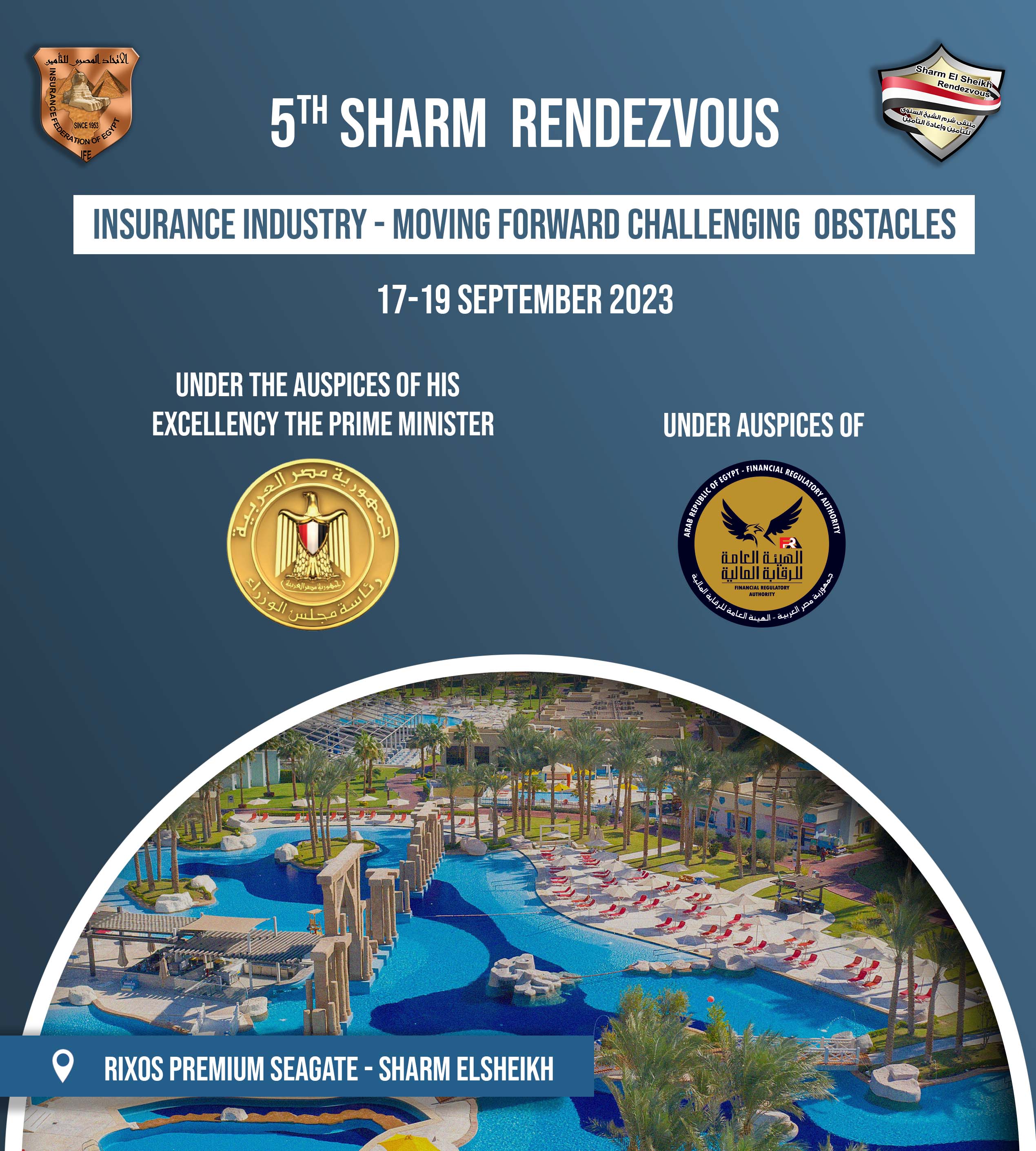
BL: What were your impressions of Sharm Rendezvous 2025?
Salman Alnassaar: It was an opportunity to conduct business in the same way as insurers or brokers, it provided an excellent opportunity to exchange information, explore potential collaborations, and plan for future business.
For me personally, it was about meeting people and making sure they know me. As an independent adjuster, I am not part of the international networks, so events like this allow me to introduce myself to international brokers and reinsurers. It is important for them to know that there is an independent loss adjuster available, with extensive experience, should they need one.
The event was successful—the atmosphere was good, the weather was pleasant, and the timing was appropriate, though in previous years it was held in October. My only wish is that they had included a panel discussion bringing together loss adjusters and insurance companies. That would have been valuable for knowledge-sharing. However, I understand that the focus was on networking and business generation, which is what made the event successful.
BL: My last question: how do you see the current wars in the MENA region—such as the war in Syria, the conflict in Gaza, and the low-intensity clashes in southern Lebanon—impacting the insurance industry and your own profession?
Salman Alnassaar: Instability affects every kind of business, and wars inevitably create instability. This directly impacts insurance, limiting the expansion of insurable projects and reducing opportunities for loss adjusters. I am not a politician, so I cannot analyze the broader geopolitical implications, but from a business perspective, the effect is 100 percent negative. We can only wish and pray for peace to prevail across the region and the world.
BL: Some argue that these wars are opening new doors for insurance companies, as people are now eager to insure against wars and natural disasters like earthquakes. What is your view?
Salman Alnassaar: Let me give you a concrete example of war risk. Prior to August 2nd 1990, Kuwait held a war risk policy for a fleet valued of $1.4 billion but only with a sum insured of USD 300 million. At the time, no one expected war to occur, and premiums were paid smoothly. But when war did break out, the policy was cancelled.
The lead underwriter at the time, Mr. Merit, convened a meeting with all participating insurers. He declared the policy binding and, as the major shareholder and lead underwriter, agreed to pay Kuwait $300 million, the full limit of the war risk policy, even though some participants had expressed doubts regarding the existence of Kuwait or Kuwait Airways. This case became the largest war risk claim settlement in the history of loss adjusting, and it remains a landmark example of how the insurance industry responds to catastrophic events.
Closing Note
Salman Alnassaar’s career reflects resilience, technical mastery, and unwavering integrity. From pioneering as the first GCC national to establish an independent loss-adjusting firm, to building trusted relationships across the region, his journey underscores the importance of professionalism and transparency in an industry often tested by crisis. As he looks ahead to 2026, with new projects and his daughter Alia joining the firm, Alnassaar remains committed to the values that have defined his success: honesty, precision, and dedication to clients.