
Read Full Magazine Here. In today’s interconnected world, the insurance and reinsurance industry is facing unprecedented challenges.
Geopolitical volatility, energy market disruptions, cyber threats, and regulatory shifts are converging to reshape the very foundations of risk management. Brokers, insurers, and reinsurers are no longer dealing with isolated events; instead, they must navigate a landscape where a single geopolitical shock can ripple across multiple sectors simultaneously—marine, aviation, energy, trade credit, cyber, and property.
Geopolitical impact: how are currently geopolitical tension in the Middle East and North Africa reshaping insurance and reinsurance portfolios, and what strategies do you recommend for brokers navigating this volatility. Geopolitical tensions across the Middle East and North Africa are fundamentally reshaping insurance and reinsurance portfolios by forcing the market to reassess three core assumptions simultaneously: insurability, aggregation, and capital deployment. The shift is no longer confined to traditional "war risk" classes. Reinsurers now view geopolitical instability as a cross-line accumulation issue affecting marine, aviation, energy, political violence, cyber, trade credit, business interruption, and even property portfolios through supply-chain contagion.
Against this backdrop, ELAM Insurance Group has emerged as a beacon of resilience and innovation. With offices in Cyprus, the United Arab Emirates, and Lebanon, ELAM delivers consultancy, reinsurance broking, claims recovery, run‑off and commutation solutions, and specialized talent acquisition services. Its dedicated reinsurance broking arm, AstenRe, strengthens ELAM’s ability to structure complex treaty and facultative placements across global markets. Its reach extends across more than 30 countries, offering precision‑driven strategies and client‑centered solutions that safeguard businesses in volatile times.
At the helm is Robert Habchi, Founder and Group CEO, whose entrepreneurial drive and operational expertise have propelled ELAM into a trusted regional and international partner. With over a decade of experience in the insurance and reinsurance sector, Habchi has successfully led projects ranging from policy reviews and risk management to debt collection and claims management. His leadership has directly contributed to the recovery of hundreds of millions of US dollars for insurance companies across the MENA region, reinforcing ELAM’s reputation for excellence and reliability.
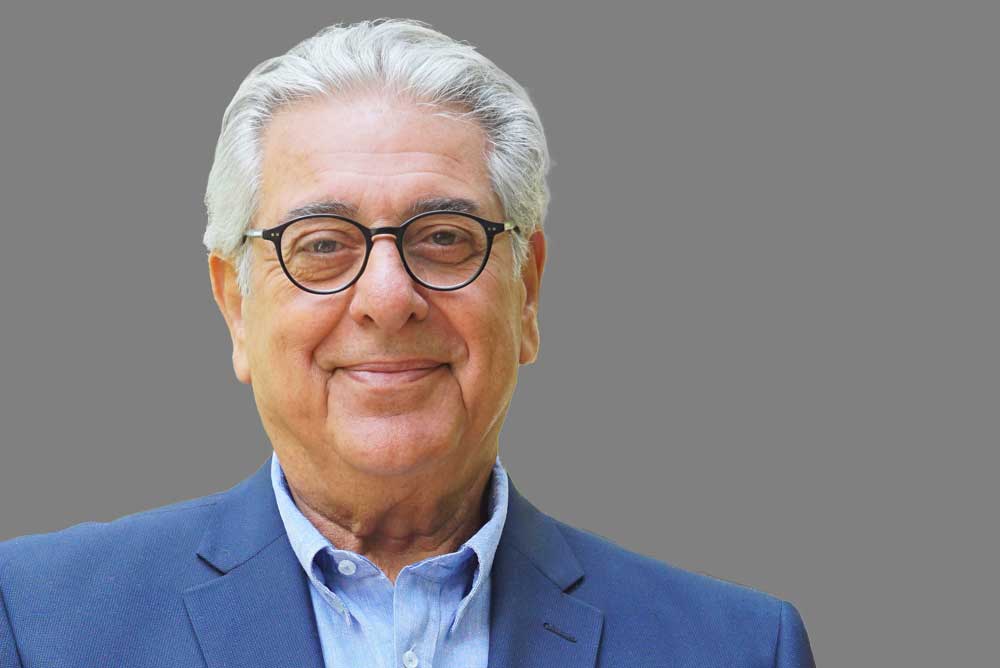
Complementing this vision is Sami El Khoury, Partner at ELAM Insurance & Reinsurance Solutions, a distinguished industry veteran with more than 40 years of experience across the MENA region and Europe. A graduate of Boston University’s School of Management, El Khoury began his career in direct insurance with UAP in Saudi Arabia and the UAE before advancing into reinsurance brokerage in Paris with Euromepa and Nasco France. Over two decades in Europe, he cultivated long‑term partnerships, advised leading clients, and built a reputation for innovative treaty and facultative placements.
El Khoury’s leadership is defined by his ability to bridge local and international markets, guiding clients through complex risk environments with confidence. His expertise spans underwriting, portfolio management, and advisory on specialized classes of business—including marine, aviation, fine art, and financial lines. Today, as Partner at ELAM, he strengthens the Group’s B2B services, supports group captives, and advises on highly complex portfolios, ensuring ELAM remains a trusted partner in times of uncertainty.
BUSINESS LIFE reporter had a wonderful exclusive interview with the popular and famous insurance leader Sami El Khoury, exploring his leadership, insights on geopolitical challenges, and the future of insurance and reinsurance in the MENA region.
Geopolitical Impact
BL: How are current geopolitical tensions in the Middle East and North Africa reshaping insurance and reinsurance portfolios, and what strategies do you recommend for brokers navigating this volatility?
Sami El Khoury: Geopolitical instability is now a systemic issue reshaping the foundations of insurance and reinsurance.
Geopolitical tensions are fundamentally reshaping insurance and reinsurance portfolios by forcing the industry to reassess three core assumptions simultaneously: insurability, aggregation, and capital deployment. Instability is no longer confined to “war risk” classes—it now affects marine, aviation, energy, political violence, cyber, trade credit, and property portfolios. A single geopolitical event can trigger multiple claims across different lines, creating systemic stress.
- It forces reassessment of insurability, aggregation, and capital deployment.
- No longer confined to “war risk” classes, it now affects marine, aviation, energy, political violence, cyber, trade credit, and property portfolios.
- A single geopolitical event can trigger simultaneous claims across multiple classes.
Examples:
- A missile strike may cause property damage, marine delay, business interruption, cyber disruption, and political violence claims.
- Shipping disruptions in Hormuz affect marine portfolios directly but also indirectly impact energy, inflation, trade credit defaults, and supply‑chain costs globally.
Broker strategies:
- Shift from transactional broking to strategic advisory.
- Provide scenario analysis, sanctions guidance, supply‑chain mapping, and crisis response planning.
- The broker who explains how cyber‑war exclusions interact with terrorism clauses or how a Hormuz closure affects contingent BI will be indispensable.
Energy & Market Disruption
BL: With energy market disruptions and supply chain instability, what innovative risk‑transfer mechanisms can insurers adopt to protect corporate clients?
Sami El Khoury: Energy volatility and fragile supply chains demand innovation beyond traditional indemnity policies.
- Parametric insurance delivers rapid payouts based on triggers like oil price shocks or port closures.
- Structured reinsurance programs and multi‑trigger products hedge cascading risks.
Program structures to consider:
- Layered facultative structures
- Parametric overlays
- Captives
- Structured reinsurance
- Shorter‑duration placements for volatile zones
For Gulf exposures:
- Split core property risk, political violence, marine transit, and trade disruption into separate capital solutions.
These mechanisms are lifelines for corporates navigating uncertainty.
Global Market Trends
BL: Could you share new insights into the trends influencing global insurance markets amid growing turbulence, and how these trends are likely to affect the MENA region?
Sami El Khoury: Global turbulence is driving three dominant trends:
- Surge in cyber coverage demand
- Heightened regulatory scrutiny on capital adequacy
- Rise of sustainability‑linked insurance
In MENA:
- Higher baseline pricing
- Persistent volatility in renewals
- More conservative underwriting
Geopolitical instability is now seen as structural, not episodic. Clients must prepare for bespoke solutions, greater scrutiny of accumulations, and persistent volatility.
Macroeconomic Outlook
BL: What are your comments on the present macroeconomic and insurance market outlook, particularly in light of inflationary pressures and tightening capital conditions?
Sami El Khoury: Inflation and capital tightening are reshaping underwriting capacity.
- Specialty lines—cyber, political violence, and energy—remain attractive to capital providers.
- The market is bifurcated: diversified portfolios attract capital, concentrated regional exposures face repricing.
Capacity trends:
- More selective
- More short‑tail
- More facultative
- More exclusion‑heavy
- More conditional
This means higher attachment points, narrower wordings, shorter policy periods, and increased scrutiny of sanctions exposure.
Volatile Risk Environment
BL: What does today’s volatile risk environment mean for businesses, corporate insurance demand, and the future of risk transfer strategies?
Sami El Khoury: Volatility is now structural and persistent.
- Businesses must budget for elevated insurance costs and turbulence in renewals.
- Risk transfer strategies must evolve: captives, parametric overlays, and multi‑trigger products are essential.
Clients need:
- Scenario analysis
- Sanctions guidance
- Exposure aggregation reviews
- Crisis response planning
The future belongs to bespoke solutions tailored to geopolitical and economic complexity.
Career Foundations
BL: Looking back at your early career in Saudi Arabia and the UAE, what lessons from those formative years remain most relevant to today’s insurance landscape?
Sami El Khoury: Adaptability was the defining lesson of my early career.
- Working in Saudi Arabia and the UAE meant navigating shifting regulatory frameworks, client expectations, and geopolitical realities.
- Flexibility and responsiveness remain vital principles for effective risk management today.
European Experience
BL: How did your decades in Paris with Euromepa and Nasco France shape your global perspective on reinsurance, and what practices from Europe have you brought to MENA markets?
Sami El Khoury: My European experience emphasized precision and partnership.
- Long‑term relationships, innovative treaty placements, and portfolio diversification were central.
- Balancing client needs with reinsurer demands through precise wording and structured programs became second nature.
- These practices now inform ELAM’s MENA approach, combining local expertise with global capital.
Treaty & Facultative Innovation
BL: In treaty and facultative placements, what innovations are proving most effective in balancing client needs with reinsurer demands?
Sami El Khoury: Treaty and facultative innovation is driven by clarity and structure.
- Innovations include layered facultative structures, aggregate caps, cyber‑war exclusions, and SRCC definitions.
Renewals now focus on:
- Event limits
- Aggregate caps
- Terror vs war trigger disputes
- Definitional clarity
Challenge:
- Definitional ambiguity—was the event terrorism, cyber warfare, sabotage, or conventional war?
- Morningstar DBRS noted these distinctions are increasingly blurred, raising litigation and coverage uncertainty.
Clear wording and definitional precision are critical for securing both client protection and reinsurer confidence.
Claims Recovery Challenges
BL: What are the biggest challenges facing claims recovery in the MENA region, and how does ELAM’s expertise help maximize recoveries for clients?
Sami El Khoury: Claims recovery in MENA is often slowed by disputes and regulatory hurdles.
- Geopolitical complexities add further delays.
- ELAM accelerates recoveries, minimizes friction, and leverages decades of expertise to secure optimal settlements.
- Our track record of recovering hundreds of millions of US dollars demonstrates tangible results for clients.
AI Transformation
BL: Artificial intelligence is reshaping underwriting, claims, and portfolio management. How do you see AI transforming the insurance and reinsurance industry, and what opportunities or risks does it present?
Sami El Khoury: AI is revolutionizing every stage of the insurance cycle.
- Predictive analytics enhance underwriting.
- Fraud detection strengthens claims management.
- Portfolio optimization improves capital deployment.
Risks remain:
- Data privacy
- Model bias
- Regulatory oversight
The challenge is to harness AI responsibly, ensuring innovation does not compromise trust.
Cybersecurity Threats
BL: Cyberattacks are now among the fastest‑growing risks globally. How should insurers and reinsurers adapt their products and risk models to address this evolving threat?
Sami El Khoury: Cyber risk has become one of the most systemic exposures in today’s market.
- Insurers must expand coverage and integrate cyber‑war carve‑backs to avoid blanket exclusions that leave clients exposed.
- Risk models must evolve dynamically, reflecting the speed at which cyber threats mutate.
Strategic adaptations:
- Collaboration with cybersecurity experts to anticipate new attack vectors.
- Investment in real‑time monitoring and scenario modeling to prepare for systemic cyber events.
- Development of hybrid products that combine cyber coverage with political violence and terrorism clauses, recognizing the blurred lines between state‑backed cyber warfare and criminal activity.
The industry must treat cyber as a multi‑line accumulation risk, not a standalone exposure. Brokers who can explain how cyber‑war exclusions interact with terrorism triggers will be indispensable.
Talent & Recruitment
BL: How does ELAM’s talent acquisition arm, AUREN, strengthen the industry’s resilience by sourcing specialized expertise in a sector facing skill shortages?
Sami El Khoury: Talent is the backbone of resilience in insurance and reinsurance.
- AUREN identifies and recruits specialized professionals in underwriting, claims, and risk management.
- This ensures the industry has the expertise required to manage increasingly complex risks.
Impact of AUREN:
- Builds long‑term capacity rather than simply filling vacancies.
- Strengthens resilience by embedding specialized knowledge into client programs.
- Addresses the global skill shortage in specialty lines such as cyber, political violence, and energy.
In a sector where expertise is scarce, talent acquisition is not just recruitment—it is a strategic investment in the industry’s future stability.
Local vs Global Strategy
BL: How do you balance local market realities with global reinsurance strategies, especially when advising clients with cross‑border portfolios?
Sami El Khoury: Balancing local realities with global capital is a delicate but essential task.
- Solutions must be tailored to bridge regional risks with international capacity.
- Brokers act as translators between local exposures and global strategies.
Approach:
- Align treaty structures with local regulatory frameworks.
- Diversify reinsurance panels geographically to avoid overdependence on a single market.
- Ensure coverage is both relevant to local realities and resilient in the face of global shocks.
This balance allows clients to benefit from regional expertise while accessing global capital pools, ensuring portfolios remain robust across borders.
Specialized Classes of Business
BL: Which specialized classes of business—marine, fine art, financial lines, expatriate medical—are most exposed to current geopolitical and cyber risks, and how should they be managed?
Sami El Khoury: Marine, aviation, financial lines, fine art, and medical insurance are most exposed. They should be managed through diversification, facultative placements, and specialized wording clarity. Each class requires bespoke solutions—marine portfolios must account for shipping disruptions, fine art policies must address theft and cyber sabotage, and medical insurance must adapt to expatriate mobility in volatile regions.
Specialized classes are increasingly at the center of volatility.
- Marine, aviation, financial lines, fine art, and medical insurance are most exposed.
- Each requires bespoke solutions tailored to its unique vulnerabilities.
Management strategies:
- Marine portfolios must account for shipping disruptions in Gulf corridors and supply‑chain contagion.
- Fine art policies must address theft, cyber sabotage, and terrorism risks.
- Financial lines must integrate sanctions guidance and political risk scoring.
- Medical insurance must adapt to expatriate mobility in volatile regions.
Reinsurers now treat geopolitical instability as a cross‑line accumulation issue. A single event can trigger claims across multiple classes, pushing underwriters toward correlation‑based portfolio management. Brokers must focus aggressively on wording clarity—war exclusions, cyber‑war carve‑backs, SRCC definitions, and terrorism triggers—to avoid disputes in grey‑zone conflicts.
Future Blueprint
BL: Looking ahead, what is your blueprint for resilience in the next decade of insurance and reinsurance, and how will ELAM continue to lead in this transformation?
Sami El Khoury: The blueprint for resilience lies in combining foresight, adaptability, and innovation. Resilience will depend on combining geopolitical insight, technical structuring, treaty expertise, and data‑led advisory services. ELAM will continue to lead by transforming risks into opportunities and delivering long‑term value for clients worldwide. Our blueprint is built on foresight, adaptability, and innovation—qualities that ensure we remain a trusted partner in uncertain times.
- ELAM will continue to lead by transforming risks into opportunities and delivering long‑term value for clients worldwide.
- Our approach integrates geopolitical insight, technical structuring, treaty expertise, and data‑led advisory services.
Future outlook:
- The MENA geopolitical environment is accelerating a global shift from broad risk mutualization toward selective, intelligence‑driven capital deployment.
- Winners in broking will be those who combine geopolitical literacy with actuarial expertise.
- Geopolitical literacy is rapidly becoming as important as actuarial literacy in specialty markets.
ELAM’s role is to stay ahead of this curve—preparing clients for persistent volatility, tighter capacity, and the need for bespoke, innovative solutions. Our blueprint is built on resilience, adaptability, and innovation, ensuring we remain a trusted partner in uncertain times.
Closing Note
As geopolitical volatility, technological disruption, and cyber threats converge, Sami El Khoury’s insights reaffirm the importance of experience, foresight, and adaptability. His leadership at ELAM Insurance Group demonstrates how resilience and innovation can transform challenges into opportunities, ensuring that insurers and reinsurers remain strong pillars of economic stability in uncertain times.
El Khoury emphasizes that the future of insurance and reinsurance lies not in reactive measures but in proactive, intelligence‑driven strategies. Brokers and insurers must evolve into trusted advisors who combine geopolitical literacy with technical structuring, treaty expertise, and data‑led advisory services. The ability to anticipate risks, clarify complex treaty wordings, and diversify reinsurance panels across global markets will define the winners in this new era.
At the same time, the industry must embrace innovation—parametric solutions, AI‑driven analytics, and hybrid treaty‑facultative structures—while maintaining clarity and discipline in coverage definitions. For El Khoury, resilience is not simply about surviving volatility; it is about building systems and partnerships that thrive in it.
Together with Robert Habchi’s entrepreneurial drive, ELAM Insurance Group stands as a powerhouse in claims recovery, risk management, and talent acquisition. Their combined leadership ensures that ELAM continues to transform risks into opportunities, delivering long‑term value for clients worldwide.
In closing, El Khoury reminds us that insurance is more than a financial safeguard—it is a cornerstone of global stability. By bridging local realities with international capital, by investing in people as much as in portfolios, and by treating geopolitical literacy as equal in importance to actuarial science, ELAM Insurance Group is charting a blueprint for resilience in the next decade.
In an era defined by uncertainty, ELAM’s vision is clear: resilience, foresight, and innovation will remain the guiding principles that secure the industry’s future.