
Read Full Magazine Here. In 2026, navigating healthcare in Lebanon remains one of the most complex challenges facing both citizens and corporations alike.
A volatile macroeconomic climate, continuous infrastructural strains, and a shifting healthcare landscape have forced the insurance sector to completely rewrite its playbook. Survival is no longer just about managing risk; it is about rapid digital transformation, operational resilience, and maintaining trust when the stakes are literally a matter of life and health.
At the center of this critical intersection sits Third-Party Administrators, or TPAs, acting as the vital bridge between insurers, medical providers, and the patients who rely on them.
On a regional scale, the numbers behind this machinery are massive. Established in 1999, Nextcare has grown into the leading TPA for the insurance industry across the GCC and MENA region. Today, as a member of the renowned Allianz Group, Nextcare manages an annual portfolio of over 8.5 million claims, valued at more than USD 1 billion. With a regional footprint covering over 4 million members across 120 client insurers and self-funded schemes, the company anchors its operations around the region’s first 24/7 medically staffed, multilingual call center to facilitate seamless, cashless access.
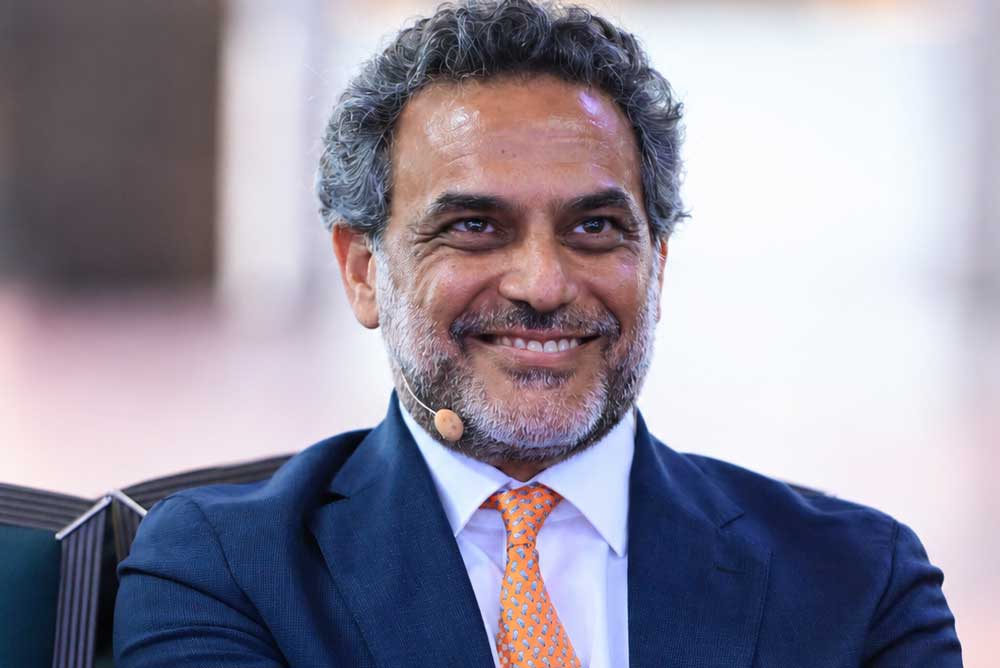
Walid Hallassou is a visionary healthcare leader and the Managing Director of Nextcare Lebanon, bringing over 27 years of distinguished professional expertise spanning the pharmaceutical, health insurance, and digital health sectors across the Middle East and Africa. His formidable academic foundation includes a Bachelor of Sciences in Biology from the American University of Beirut (AUB), a Bachelor of Pharmacy from the Lebanese American University (LAU), and a prestigious Executive MBA completed through ESA Business School and the French ESCP-EAP School of Management. This unique academic blend paved the way for an extraordinary career; before his current role, he amassed two decades of specialized mastery in health insurance, third-party administration (TPA), and managed care, notably serving as Vice President of International Business Development and Operations at GlobeMed, and subsequently as the General Manager of GlobeMed Lebanon from 2012 to 2017, where he grew the business exponentially. As a pioneering healthtech and insurtech entrepreneur, he also co-founded Waltzing Elephant, a holding company dedicated to electronic healthcare service platforms across the MENA region. Taking the helm as Managing Director of Nextcare Lebanon in April 2024 as the successor to Jihad Fleihan, his exceptional leadership was immediately proven as he skillfully steered the company through severe local economic hurdles and security challenges, maintaining robust financial and operational stability. His strategic acumen is further highlighted by his ability to forge impactful, high-level collaborations with both payers and providers to ensure uninterrupted, seamless patient access. Championing digital transformation with unparalleled foresight, Walid is currently revolutionizing Lebanon’s medical sector by integrating user-friendly platforms, leading the rollout of advanced digital services through the Lumi app, and pioneering flexible Telehealth features that redefine accessible patient care.
The Architecture of Resilience: As Lebanon navigates unprecedented macroeconomic volatility, Nextcare Managing Director Walid Hallassou reveals how the regional TPA giant balances global Allianz Group standards with local crisis management. Discover how data-driven strategies and the digital Lumi ecosystem are protecting patient care when the traditional safety net collapses.
True leadership is rarely tested in calm waters. In this month’s exclusive cover feature, we look closely at an industry operating at the absolute edge of crisis management. Healthcare in Lebanon has shifted from a predictable corporate sector into a high-stakes daily operation where survival requires rewriting the entire playbook.
Behind the shield of the global Allianz Group, Hallassou is managing a massive regional blueprint while tackling hyper-inflation and infrastructure volatility on the ground.
From the deployment of the digital Lumi app to managing major national schemes like the Order of Engineers and Architects, this conversation moves past standard corporate talking points. It pulls back the curtain on what it takes to protect millions of members when the traditional safety net collapses. It is a masterclass in operational resilience that you simply cannot afford to miss.
Managing that massive regional blueprint locally inside Lebanon, however, requires a unique brand of leadership. BUSINESS LIFE sat down with Walid Hallassou, the reputed Managing Director of Nextcare Lebanon, to unpack how the industry is adapting to these unprecedented times. Bringing over 27 years of deep pharmaceutical, healthtech, and health insurance expertise across the Middle East and Africa, Hallassou has steered the company through severe economic hurdles and security challenges since taking the helm in April 2024. From securing massive national milestones like the Order of Engineers and Architects (OEA) healthcare scheme to pushing the boundaries of digital health through the Lumi ecosystem, Hallassou reveals what it takes to protect patient care when the safety net collapses.
BL: Walid Hallassou, looking at your dual background in pharmacy solutions and health insurance, how do you view the current intersection of healthcare and digital health in Lebanon?
Nextcare Lebanon successfully met its financial and budget targets despite immense macroeconomic pressures, but data optimization only goes so far when localized crises hit. What specific operational adjustments or cost-containment strategies did you implement to achieve this financial stability, and what was the hardest budget cut you had to make to save those core insurance products?
Walid Hallassou: I have always looked at healthcare from both sides: the clinical side and the financing side. My pharmacy background makes me appreciate the value that medicine and innovation can bring to a patient; my years in health insurance have taught me that this value has to remain accessible and financially sustainable. Digital health sits exactly at that intersection.
For me, technology is not the objective. The objective is better access, better decisions, less friction and, ultimately, better health outcomes at a sustainable cost. If technology achieves that, it is valuable. If it simply adds another layer between the patient and care, then we have missed the point.
As for our performance in Lebanon, I would not attribute it to one dramatic cost-cutting decision. It came from discipline across the organization: improving productivity, scrutinizing operating costs, using data more effectively, managing medical utilization closely and, above all, protecting our relationships with clients and healthcare providers.
There was no single “hardest cut” that saved the business, and I would actually challenge that premise. In a crisis, indiscriminate cost cutting can damage the very capabilities that keep you resilient. We deliberately protected the functions that affect member access, service quality, claims management and provider relationships. The objective was not simply to become cheaper. It was to become more efficient without becoming weaker.
BL: Nextcare speaks heavily about using data to monitor risk instantaneously. However, in a market where medical costs and currency values fluctuate daily, how often does Nextcare actually have to adjust its internal pricing algorithms or premium recommendations to partner insurers just to keep pace with inflation?
Walid Hallassou: There is an important distinction here. Nextcare is a TPA, not the insurer. We do not set the insurance premium and we do not carry the insurance risk. That remains the responsibility of the insurance company.
What we do provide is increasingly sophisticated information that helps insurers understand that risk: claims trends, medical inflation, frequency and severity, utilization patterns, provider costs, disease profiles and emerging changes in the portfolio.
And this cannot be something you look at once a year anymore. In a volatile market, the data has to be monitored continuously. When we see a meaningful change, we discuss it with our insurance partners so that they can take the appropriate underwriting or pricing decisions.
The advantage today is that the conversation is becoming much more evidence-based. Instead of discovering six months later that a portfolio has deteriorated, we want to identify the signals much earlier and understand why.
BL: Nextcare’s regional reputation centers on balancing top-tier customer service with maximum cost optimization and regulatory compliance. Yet, on the ground, hospital-TPA relationships in Lebanon are heavily strained by delayed payments. How is Nextcare currently structuring its reimbursement pipelines to keep private hospitals cooperative?
Walid Hallassou: Again, it is important to distinguish the roles. As a TPA, Nextcare administers the healthcare transaction: we contract and negotiate with providers, issue approvals, adjudicate claims and audit medical bills. The ultimate funding and payment obligation belongs to the insurer or the entity financing the scheme.
That being said, we cannot say that payment issues are “not our problem.” If the financial relationship between payer and provider deteriorates, member access eventually suffers, so it becomes everyone’s problem.
Our role is therefore to make the process as transparent, accurate and efficient as possible. We work to ensure that claims are processed correctly and promptly, that disputes are identified quickly, that reconciliation is disciplined and that there is constant dialogue between ourselves, the insurer and the hospital.
I have always believed that sustainable healthcare requires a balanced relationship between payer and provider. Neither side can sustainably win at the expense of the other. Hospitals have to be paid fairly for appropriate care, insurers need medical costs they can sustain, and patients need reliable access. Our job is to help make those three things coexist.
BL: Despite stable pipelines, many Lebanese patients still report being asked for ‘fresh dollar’ cash deposits at hospital admission desks, even while holding a valid Nextcare TPA card. When a hospital demands an unauthorized out-of-pocket fee from a member, how does your team actively intervene in real-time to stop it?
Walid Hallassou: First, we have to distinguish between a legitimate patient contribution and an unauthorized charge. Depending on the policy, a member may have a deductible, co-payment, excluded service, benefit limit or another contractual contribution. Holding a Nextcare card does not necessarily mean that every medical expense is covered at 100%.
But where a provider asks for an amount that is inconsistent with the patient’s coverage or with our contractual arrangements, we intervene.
These situations cannot be managed from an office the following week. They have to be addressed while the patient is seeking care. Our teams communicate directly with the provider, verify eligibility and coverage, clarify the approval and try to resolve the issue immediately.
For me, this is one of the most important functions of a TPA. A patient entering a hospital is often anxious and vulnerable. They should not have to become the negotiator between an insurance company, a TPA and a hospital. We should solve that problem around them.
BL: As a healthtech and insurtech entrepreneur, you have championed digital transformation by integrating user-friendly platforms and primary care tools, specifically overseeing the rollout of advanced digital services and upcoming telehealth features via the Lumi app. What are your comments on the current maturity of Healthtech and Insurtech in the region?
Walid Hallassou: The region has progressed tremendously, but I would say we are moving from the first generation of digitalization into a much more interesting second generation.
The first generation was largely about digitizing transactions: electronic cards, online claims, provider search, approvals and administrative processes. All of that was necessary and has already created considerable value.
The next phase is different. It is about using technology to influence the actual healthcare journey: symptom checking, digital triage, telehealth, primary care, chronic-disease management, medication support, prevention and eventually much more personalized healthcare.
That is where I think healthtech and insurtech really converge.
We also need to stop measuring digital success by downloads or features. The important questions are: Did it make healthcare easier to access? Did it prevent an unnecessary emergency-room visit? Did it identify a health problem earlier? Did it improve adherence? Did the member have a better experience? Did it help contain cost without compromising quality?
Those are much more meaningful measures of digital maturity.
BL: The Lumi Health Ecosystem is positioned as a solution for flexible, end-to-end patient care, but Lebanon suffers from intense internet and electricity volatility. How are you overcoming these localized infrastructure issues to keep digital services active? For instance, if a doctor in a rural or heavily impacted area loses power mid-consultation, what is the analog fail-safe? Is there a traditional phone-in system, or does the patient simply have to wait?
Walid Hallassou: Digital-first should never mean digital-only.
Lebanon is exactly the kind of market that teaches you this. We want members to benefit from Lumi because it makes many interactions significantly simpler—from accessing insurance information and submitting claims to finding providers and, as services become available, accessing digital healthcare.
But healthcare cannot stop because someone’s Wi-Fi stops.
Our underlying operation therefore remains multi-channel. The traditional service infrastructure, customer-service channels, provider communication and medical support processes do not disappear because an app exists. They complement one another.
And that is an important principle for us when introducing technology in Lebanon: build for the environment you actually operate in, not for an ideal environment that exists in a presentation.
Technology has to increase resilience, not create a new single point of failure.
BL: Following up on that, digital health relies entirely on access to modern technology. Are you concerned that a digital-first strategy inadvertently excludes the most vulnerable socioeconomic tiers in Lebanon who cannot afford smartphones or stable connectivity?
Walid Hallassou: Absolutely—and that is why I prefer the expression digitally enabled rather than digital only.
Healthcare already contains inequalities in income, geography, education and access. We should be extremely careful not to add digital inequality to that list.
Digital channels are very powerful because they can actually democratize access. A virtual consultation, for example, can help someone who lives far from a major medical center, cannot easily leave work or has mobility difficulties. So technology can reduce inequality.
But only if we design it inclusively.
The solution is choice. Give people excellent digital tools when they can and want to use them, while preserving human and traditional channels for those who cannot.
The patient should adapt as little as possible to our system. Our system should adapt to the patient.
BL: Nextcare recently achieved a massive national milestone by managing the healthcare scheme for the Order of Engineers and Architects (OEA), which protects 115,000 members. Managing a prominent national portfolio of this size makes Nextcare a prime target for cyber warfare, which has spiked regionally. What advanced cybersecurity protocols has Nextcare established to protect highly sensitive patient medical data from targeted breaches? If Nextcare Lebanon experienced a catastrophic data breach tomorrow, what is your immediate protocol for notifying members, and where is the physical backup data stored—locally in Beirut or securely overseas?
Walid Hallassou: Healthcare information is among the most sensitive categories of personal data, so cybersecurity and data protection are governance issues for us, not simply IT issues.
As part of Nextcare and the wider Allianz environment, we operate within structured information-security, privacy, access-control and business-continuity frameworks. We apply controls across the lifecycle of the information and continuously review risk as threats evolve.
If an incident were to occur, there are established escalation, containment, investigation and notification procedures involving the relevant security, privacy, legal and management functions, with notifications made in accordance with applicable regulatory and contractual requirements.
There is one part of your question I deliberately would not answer publicly, which is the precise architecture or physical location of backup infrastructure. Good cybersecurity includes not publishing information that could make an attacker’s job easier.
The important point for members is that resilience and recovery are designed into the environment and that sensitive health information is treated accordingly.
BL: Your active engagement in local industry forums underscores a tight bond with local brokers. However, brokers are caught in an aggressive crossfire—squeezed between TPAs trying to control costs and corporate clients demanding cheaper premiums. When brokers push back and tell you that Nextcare’s network
restrictions are making policies too hard to sell, how do you handle that tension? Where is the exact line where you refuse to compromise on network quality just to lower a premium price?
Walid Hallassou: I don’t really see brokers as being on the opposite side of this discussion. A good broker is ultimately trying to solve the same problem we are: giving a client the best possible combination of coverage, quality, access and affordability.
A larger network is not automatically a better network. And a smaller network is not automatically a cost-containment strategy. What matters is which providers are included, the quality they deliver, their geographical accessibility, their cost and whether the network is appropriate for the population being covered.
We listen carefully to brokers because they are close to the client and they understand what clients value. But there is a point beyond which lowering cost by degrading access or quality becomes counterproductive.
My line is relatively simple: cost optimization has to remove inefficiency, not necessary care.
If a cheaper product creates a poor member experience or prevents appropriate access to healthcare, ultimately nobody wins—not the TPA, not the broker and certainly not the insurer whose name is on the policy.
BL: You’ve noted in past statements that digital triage and primary care tools can control
costs by preventing unnecessary, expensive emergency room visits. But what about chronic illnesses or oncology care where ‘medical waste’ isn’t the issue, but the sheer cost of long-term treatment is? In a country with a collapsing public healthcare safety net, how can a private TPA practically prevent quality health insurance from becoming an unaffordable luxury for the average Lebanese citizen without bleeding money?
Walid Hallassou: This is probably the most important question in the interview because there is no technological shortcut around it.
A cancer treatment is not expensive because somebody went unnecessarily to an emergency room. A diabetic patient requires lifelong management. New medicines can produce extraordinary outcomes but can also come at extraordinary cost. Pretending that utilization management alone will solve this would be misleading.
We therefore have to attack affordability from several directions.
First, prevention and early diagnosis remain essential. Managing diabetes well today is less costly—and much better for the patient—than treating renal failure or cardiovascular complications later.
Second, we have to move from simply paying for activity toward paying for value wherever possible. The conversation with providers and pharmaceutical companies increasingly needs to be about outcomes, pathways and appropriate utilization, not just unit prices.
Third, insurance products themselves will need to evolve. We need more flexibility, different benefit structures, better primary-care models and solutions designed for different affordability levels rather than assuming that one traditional comprehensive product can serve everyone.
And finally, there is a limit to what the private sector can solve alone. Catastrophic disease and universal access to healthcare are ultimately societal questions. Lebanon needs a clearer public-private healthcare financing model.
A TPA can eliminate waste and improve efficiency. What it cannot—and should not—do is define necessary medical care as waste simply because that care is expensive.
BL: How does a regional TPA giant balance global Allianz Group corporate standards with the volatile realities of a hyper-inflationary market?
Walid Hallassou: For me, the two are complementary rather than contradictory.
Being part of Nextcare and Allianz gives us access to capabilities that would be extremely difficult to reproduce locally: technology, security, governance, medical expertise, international experience and the ability to learn from many different markets.
But you cannot simply take a global model and impose it unchanged on Lebanon.
Healthcare is intrinsically local. Provider behaviour is local, regulation is local, patient expectations are local, economics are local and, as Lebanon has demonstrated repeatedly, crises are very local.
So the model is global standards with local intelligence.
There are areas where we should never compromise—governance, ethics, data protection, medical quality and compliance. But there are other areas where flexibility is essential: how we organize operations, interact with providers, design solutions with insurers or respond to a rapidly changing market.
That balance has been one of the reasons we have been able not only to remain resilient in Lebanon but to grow through a very difficult period.
And I think that is what resilience actually means. It is not simply surviving a crisis. It is coming out of it with a stronger organization, stronger partnerships and a clearer idea of what you need to do next.
Closing Note
Today’s interview underscores a critical reality: the future of Lebanese healthcare relies heavily on striking a perfect balance between cutting-edge digital efficiency and absolute operational resilience. Whether tech innovation can fully outpace macroeconomic pressure remains to be seen, but leaders like Nextcare are clearly setting a definitive benchmark for 2026 and beyond.
" Technology is not the objective; better healthcare is. Digital transformation only matters when it improves access, outcomes and the patient experience. — Walid Hallassou, Managing Director of Nextcare Lebanon"